

Why Former Journalist Lindsay Bennett Believes Earned Media Is Critical for AI Visibility
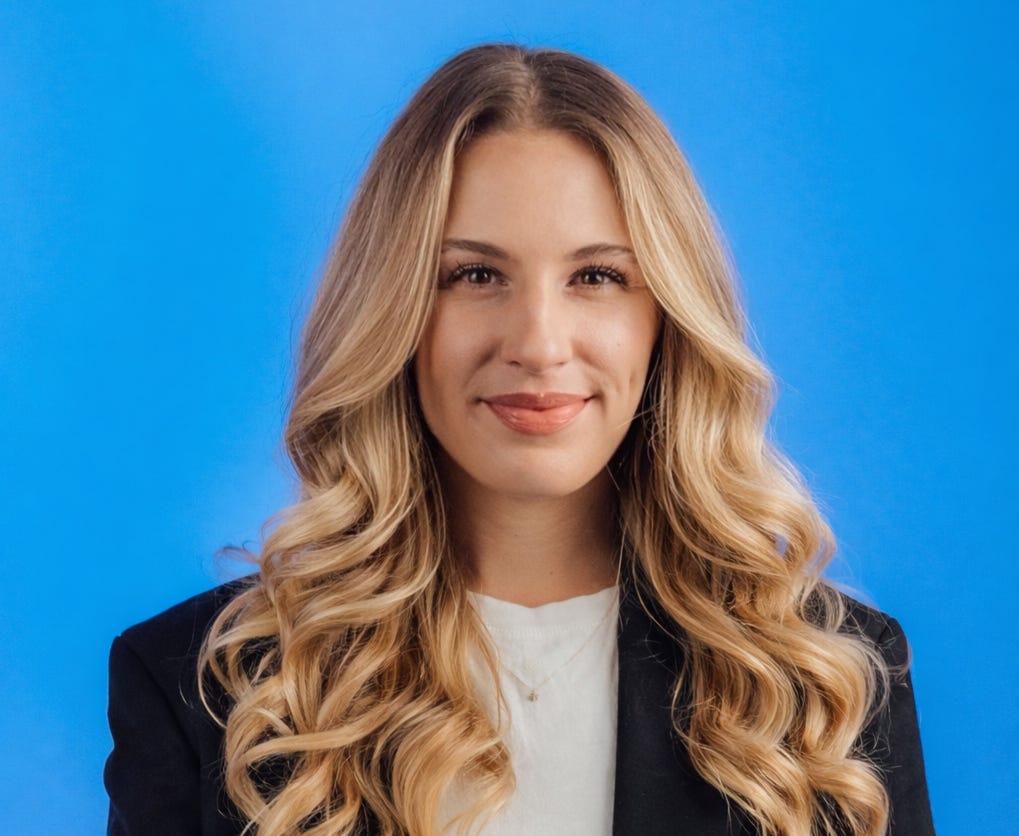
Lindsay Bennett knows a thing or two about storytelling.
What’s difficult for some people in communications, she has figured out how to do: turn company announcements and product launches into compelling stories that lead to media coverage.
Like Bennett, most public relations leaders and communicators view earned media as a major win for their clients or the organizations they serve.
Bennett, who began her career in journalism in Australia before becoming the first communications leader at market research platform Ideally, told EIN Presswire that her ability to build consistent media coverage comes from the storytelling instincts she developed early on as a journalist.
Today, PR experts say earned media has expanded beyond traditional publications and TV news to include visibility on LinkedIn and other social platforms, in AI-powered search tools, on podcasts, through influencer content and more.
But the core idea hasn’t changed. Earned media is still nonpaid, organic exposure through media and other platforms that help build credibility and visibility.
It is a media landscape Bennett has watched unfold firsthand while adapting her approach to storytelling and communications strategies overall.
The Australian communications executive went from serving as digital editor for AdNews to leading global comms teams at major agencies like DDB and GALE in New York.
It is no surprise that Ideally, a fast-growing AI-powered platform, tapped Bennett as its head of content and communications in 2025 to help drive its international expansion.
She said in her exclusive interview with EIN Presswire that Ideally has secured dozens of earned media placements in business and trade outlets in less than a year since she stepped into the role.
That’s why journalists often become the strongest communications leaders, she added.
As for AI-driven communications strategies, Bennett opined that communicators should keep a human voice at the center of their writing while strategically using AI tools to support high-volume, repetitive tasks.
She has been an active voice in the PR industry, sparking conversations on LinkedIn about how brands are discovered by Large Language Models (LLMs) in AI search and why communicators should not lose their human tone in writing, a topic she covered in another LinkedIn post.
“I’ve made a rule that I’ll always write my own first draft, so I keep my writing edge,” she said during her interview with EIN Presswire. “AI is in my workflow all day, ideating, editing, surfacing trends, scanning the news cycle, but the first draft stays mine.”
“I’ve embraced AI to handle the basics so we can spend our time on the work that moves the business,” Bennett added.
She is also known for helping propel GALE in New York to become one of the most awarded agencies in the United States while serving in a comms leadership role.
In her interview, Bennett discusses her journey from the newsroom to leading communications teams, why she believes journalists have an advantage in the field and how earned media is helping shape AI visibility.
Q: Tell us more about your journey into communications, and how you got started.
A: My passion for storytelling sparked as early as four, when I started crafting mini picture books for my family. It was further fuelled by an obsession with reading that has continued to this day. By the time I finished school I knew I wanted to be a journalist and study communications.
I cut my teeth at a business publication called AdNews, covering the media, marketing and advertising industry. I grew from cadet to digital editor, before being poached by DDB, one of the agencies I’d been covering. At DDB, I built a comms function from scratch and had enough success turning earned media into business growth that I was promoted to lead the global comms team out of New York. After a few years there, I joined GALE to do it again, growing the comms team from zero to ten people in under two years.
Now I’m at Ideally, leading communications and content at one of the country’s fastest-growing AI startups, and learning a whole new world of technology in the process.
My passion for storytelling rings as true as ever.
Q: How has your journalism background shaped the way you build brand stories today?
A: It might be biased, but I truly believe journalists make the best communications leaders. Journalists put the story first. They think in headlines, they know what reporters want (and more importantly, what they don’t), and they thrive under the pressure of a deadline. Early in my career I was told to never stop thinking like a reporter, because that’s the edge I bring to the job. It still shapes the way I build brand stories today.
Q: What has it been like stepping in as the first comms person at Ideally and helping shape how people understand the platform?
A: It’s been a whirlwind six-plus months. The team has doubled since I joined, and announcing our Series A was the milestone moment, a clear proof point of what earned media can do for business growth.
We knew the raise had to be more than a flash in the pan. The job was to use the moment to drive sustained visibility across our home markets, signal momentum into the US, and convert attention into commercial pipelines. That meant a coordinated multi-market push across AU, NZ and US press, executive and employee activation on LinkedIn, and a product launch timed to give the story a second beat.
Tier-one trade and business press across all three markets ran the story over a sustained two-week window. Founders, employees, advisors and supporters flooded LinkedIn for the launch. Every channel reinforced the same key messaging, so coverage compounded rather than fragmented. We kept it alive with fresh angles, bringing customers into the story for a secondary wave of pitching that pushed the news cycle well past the initial drop.
The result: more than 45 pieces of coverage, a huge lift in website traffic and LinkedIn followers, and an onslaught of leads. We even got a shirtless Robert Irwin into the business pages of The Australian.
Q: It’s no secret that AI has transformed how communicators work, from research to content creation. Has it influenced the way you approach communications for a market research platform like Ideally?
A: Good comms has never mattered more, ironically because of all the AI slop. The companies cutting through right now are the ones whose content still feels inherently human, so that’s what we’ve focused on at Ideally.
AI agents scan the news cycle daily to surface what we should weigh in on and ideas for leadership content, with Claude projects trained on each leader’s tone of voice. The repeatable work that used to swallow the week now takes hours instead of days. Briefing docs for journalist interviews used to take a day; they now take thirty minutes. Case studies that used to need a week and multiple interviews now take a day and one conversation, thanks to a Claude project connected to three years of Fathom transcripts.
The AI brain drain is real. The best comms people of the next few years will be the ones who kept their writing muscle.
Q: What advice would you give communicators and PR professionals who are trying to stand out today, especially as the industry keeps changing fast?
A: Understand how PR drives AI visibility. Earned media is now one of the biggest inputs into how brands show up in LLMs. Roughly 94% of links cited by AI come from non-paid media. The comms people who understand how to land coverage that LLMs surface will be ahead of the curve.
Learn to use AI as more than an editor. The real unlock is treating it as an assistant that surfaces trends, scans the news cycle and handles the repeatable basics, so you can spend your time on the work that actually moves the business.
Read more, write more. The AI brain drain is real, and the people who keep their writing muscle are the ones who’ll stand out. The best writers are the best readers, and it’s the single most underrated investment a comms person can make in their craft.
Get on LinkedIn. It’s the single best tool for building your personal brand, and a great place to keep your writing muscle sharp.
Q: Anything else you’d like to share about the industry or helpful tips?
A: PR is having its moment in the sun. As AI slop takes over, quality writing matters more than ever, paired with the stats coming out about earned media driving LLM visibility:
-
94% of links cited by AI tools are non-paid media
-
82% come specifically from earned media
-
Gartner predicts PR budgets will double by 2027
GEO is the new battleground, and earned media is the weapon.
It all adds up to the humble comms role getting more attention than it’s had in years. We should seize the moment to ask for the investment, headcount, titles and salaries our teams deserve.
Legal Disclaimer:
EIN Presswire provides this news content "as is" without warranty of any kind. We do not accept any responsibility or liability for the accuracy, content, images, videos, licenses, completeness, legality, or reliability of the information contained in this article. If you have any complaints or copyright issues related to this article, kindly contact the author above.
